Where History Meets Nature: Olympos Beach
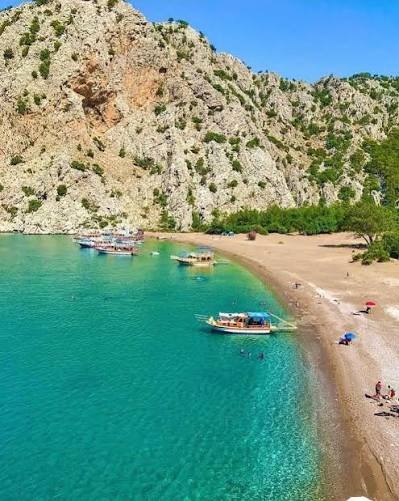
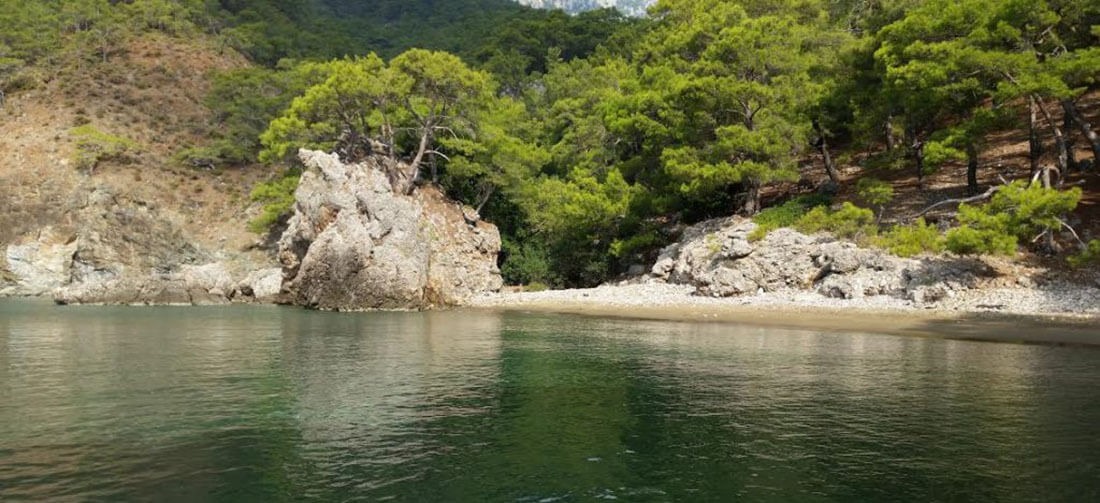
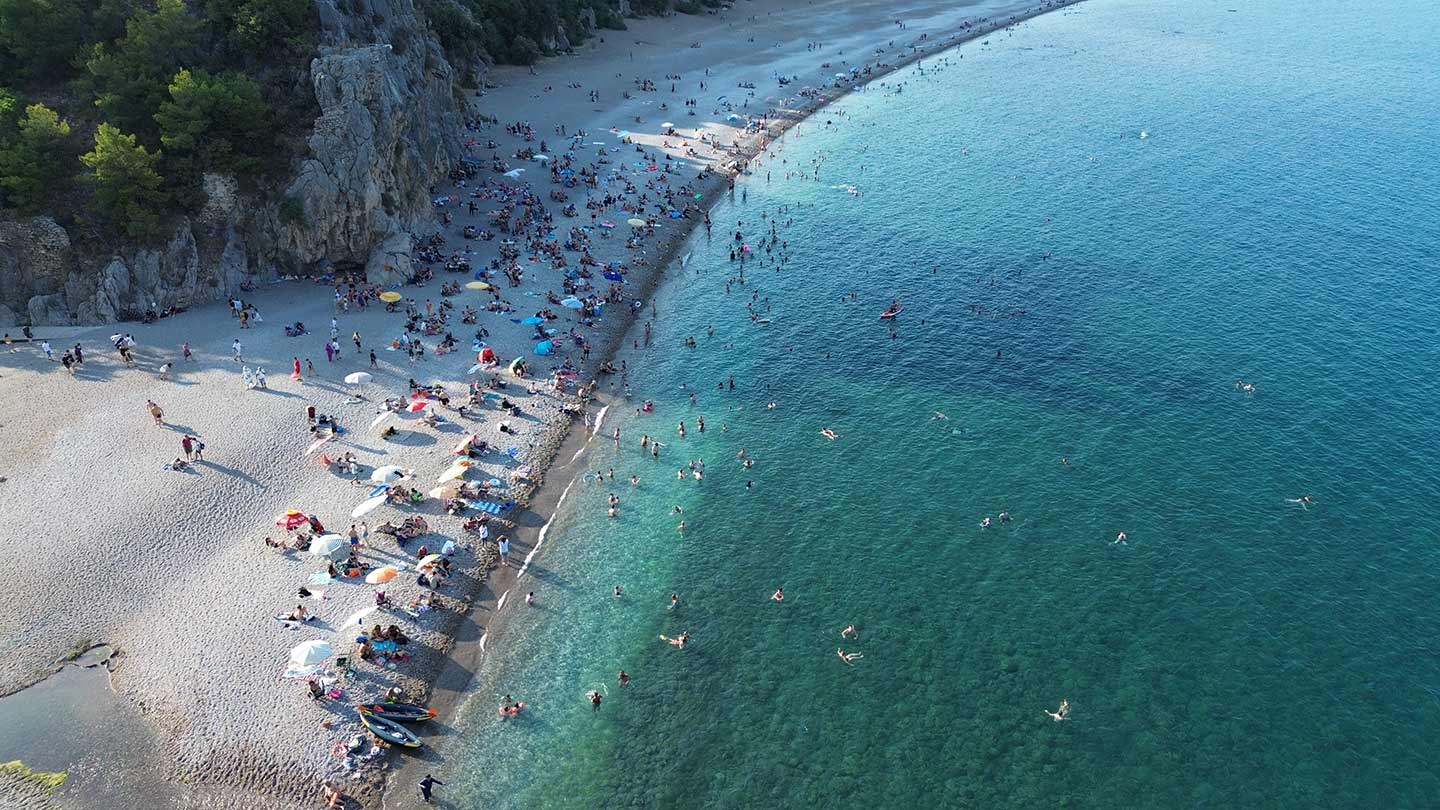
A historic path winding through the ruins of Ancient Olympos leads you through pine forest straight onto one of the Mediterranean's most untouched coves. Protected as an archaeological site, the beach has stayed free of development, making it a rare spot where history and nature meet. The sea deepens quickly right at the shoreline and stays clear and cool — though the shore itself is entirely stone and pebble.
Before You Visit
- The stony ground makes walking and swimming tricky without water shoes.
- There are no sunbeds, umbrellas, showers, toilets or snack stands on the beach, so bring your own water, snacks and shade.
- Crossing the stream that runs through the ancient city may get your shoes wet.
- The beach is a nesting site for loggerhead sea turtles (caretta caretta) — avoid using lights at night or digging in the sand.
What the Beach Is Like
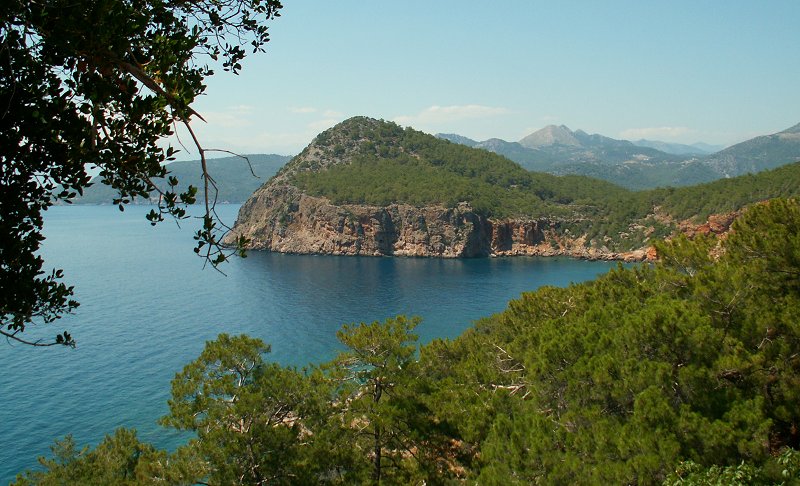
Framed by steep cliffs and thick pine cover, the cove feels remote and calm. Its stone-and-pebble shoreline makes it less comfortable for families with small children than Çıralı or Adrasan, but its untouched character makes it a favorite among photographers and history lovers alike.
Through the ancient city to the beach
The roughly 1.5 km path to the beach passes the riverside theatre, the temple gate, a basilica, tombs and traces of the harbour. Cars are left at the site entrance; you can't drive to the beach. Allow an extra 60–90 minutes for the ancient city before you swim. In summer come early in the morning or late afternoon; the most pleasant periods are May–June and September–October.
On windy days the sea can get rough. Check current entry and MüzeKart conditions on muze.gov.tr.
FREQUENTLY ASKED